Contents
The first time you think about piano for your child, you probably picture a grand piano in a living room. But for today's kids, the truth is this: a good digital keyboard delivers almost all of the learning experience of an acoustic piano, at a fraction of the cost, taking far less space, and requiring zero maintenance.
I've taught children piano for over a decade. In that time I've seen hundreds of different keyboards — some killed the child's motivation in weeks, others grew with them for years. The difference is rarely the brand. It's a handful of fundamentals. This guide covers only those fundamentals and the options that work.
1. Why a keyboard, not an acoustic piano?
An acoustic piano is beautiful — but as a child's first instrument it's often the wrong choice. Here's why:
- Space. An upright piano takes a full wall. A keyboard tucks away when needed.
- Budget. A decent new upright costs $4,000–$8,000. A capable first keyboard starts under $200.
- Volume. Acoustic pianos don't play softly. With a keyboard your child can practise with headphones at midnight without waking anyone.
- Maintenance. Acoustic pianos need tuning twice a year. Keyboards never need it.
- Flexibility. Key weight, sounds and sensitivity can all be tuned to the child's level.
Buy the acoustic later, once your child has shown the commitment and knows what kind of instrument they want.
2. What to look for in a keyboard
There are dozens of models out there. Only a few things really matter:
Number of keys
An acoustic piano has 88 keys. That's the ideal target. But for under-5s a 61-key keyboard is fine — usually lighter and smaller to fit a child's space. Move to 88 by age 7+.
Key weight
This is the single most important spec. Three categories:
- Unweighted — easiest for under-5s, but doesn't feel like a piano.
- Semi-weighted — a middle ground. Fine for early years.
- Fully weighted (hammer action) — acoustic-piano feel. The standard most teachers expect from age 7+.
Sound quality
Yamaha, Casio, Roland and Korg are the safe brands. If you can try one in a store, compare two or three piano sounds back to back.
Pedal and stand
A sustain pedal is optional at first but needed by the end of year one. A proper stand is non-negotiable — lap or desk are ergonomic disasters.
Headphone jack
Most have it but always check. If you live in an apartment, your family's sanity depends on it.
3. Recommendations by age
- Ages 2.5–5: light or semi-weighted, 61 keys. Fully weighted keys frustrate small fingers at this age.
- Ages 5–8: semi or fully weighted, 61–76 keys. Worth introducing real piano feel here.
- Ages 8+: fully weighted, 88 keys. Your child can comfortably use the same keyboard for 4–6 years.
- Adult beginner: fully weighted, 88 keys. Make the investment up front; skip the intermediate upgrade.
4. Three picks by budget
Prices are approximate and vary by market. I have no commercial relationship with any of these brands; these are simply the models I've found reliable across many students.
Casio CT-S1 / RockJam 61
Why we like it: Small, light, portable. Colourful mode options usually win a child's interest in the first session. Not fully weighted — which is actually an advantage for under-5s because small fingers don't tire.
Limit: When the child reaches 7–8 or starts notation, you'll feel the ceiling. That moment is a great milestone for upgrading.
Yamaha P-145 (formerly P-45)
Why we like it: The single most recommended keyboard among piano teachers worldwide — for good reason. 88 keys, fully weighted hammer action, real piano samples. Your child can take this through middle-school level comfortably.
What to add: X-stand or wooden stand (~$50), sustain pedal (~$30), headphones if needed.
Yamaha DGX-670
Why we like it: One of the best sounds in the market at this price. You can even adjust key weight — lighter for a younger student, heavier as they grow. Built-in styles and performance modes keep motivation alive for years.
For whom: When you already know your child is serious about piano, or it'll be shared between siblings for many years.
One more good option: used. Many piano students sadly quit within the first year — and their loss is your gain. A barely-used Yamaha P-45 from a local marketplace or music store can often be found at half the price of new.
5. Should we wait and buy an acoustic later?
Short answer: yes, waiting is usually wise. If your child genuinely loves piano, in 2–3 years they'll know what kind of acoustic suits them.
Long answer: an acoustic piano is wonderful. But matching its quality requires 3–4× the budget of a mid-to-upper keyboard plus good headphones. It takes a full wall. It needs tuning twice a year. And it can't be quiet.
Think of the keyboard as the start and the acoustic piano as the reward — that's usually the most pragmatic approach.
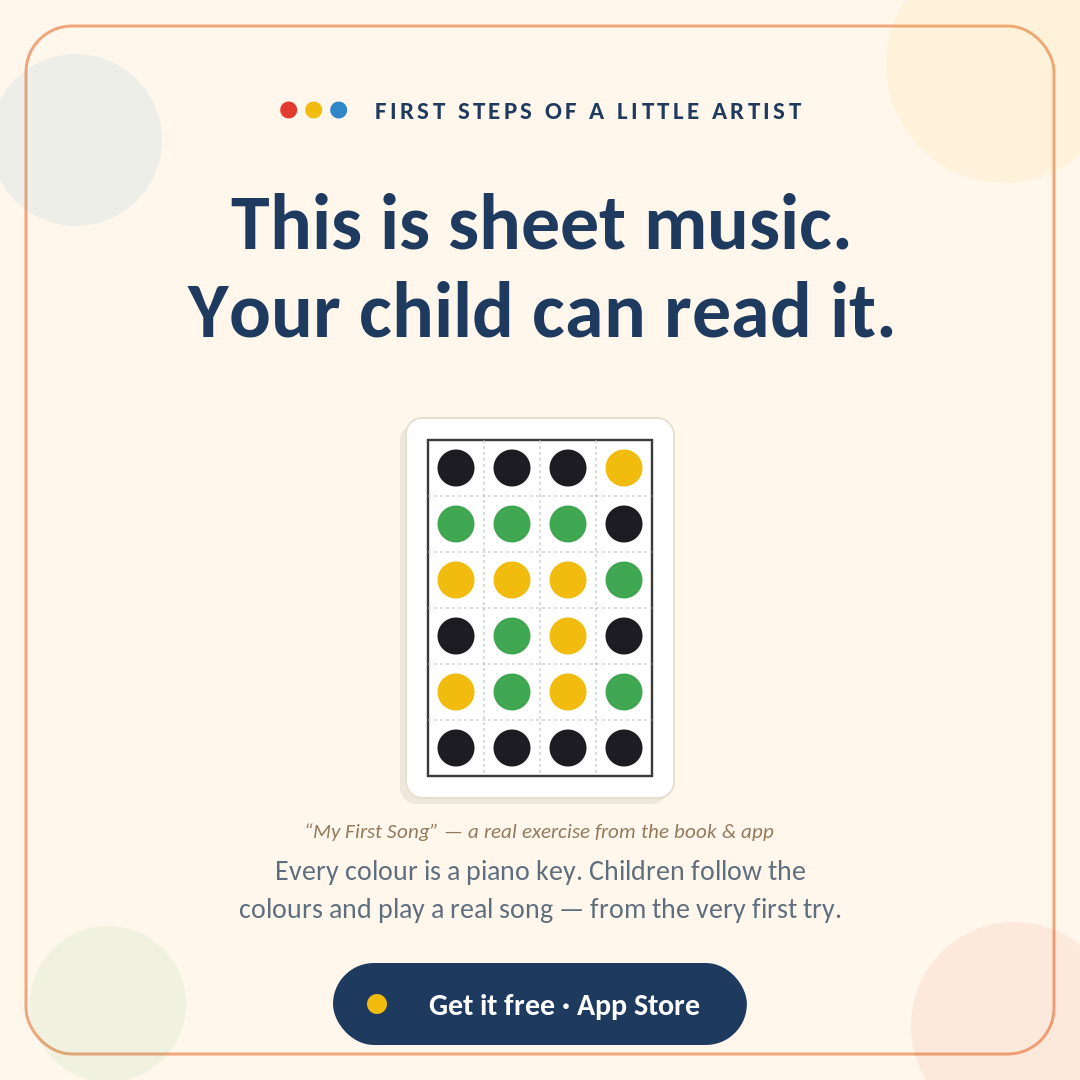
Keyboard + colour method = the gentlest start
Once the keyboard is at home, the next question is: how do we actually start? Traditional notation lessons are often too early for ages 4–6. First Steps of a Little Artist is built for exactly this gap: it removes notation entirely and gives every key a colour. The child follows the colours and plays a real song on their keyboard — in the very first session. Free.
Get it free6. Final word: don't rush, but choose smart
The two most common first-keyboard mistakes:
1. "The child is small, a toy keyboard is enough." Toy keyboards don't feel like real instruments and a child quickly disengages, missing the real joy of piano altogether.
2. "Let's buy the best one so we won't need another." A $1,500 concert keyboard for a 7-year-old is a financial weight if they quit three months in — and you'll second-guess the decision.
The right answer is in the middle: an age-appropriate keyboard that feels like a real instrument but isn't a "full investment." If the child sticks with it for a year or two, upgrading becomes a happy decision.
Good luck — and I hope you'll soon be impatient to hear your child's first real song. 🎹
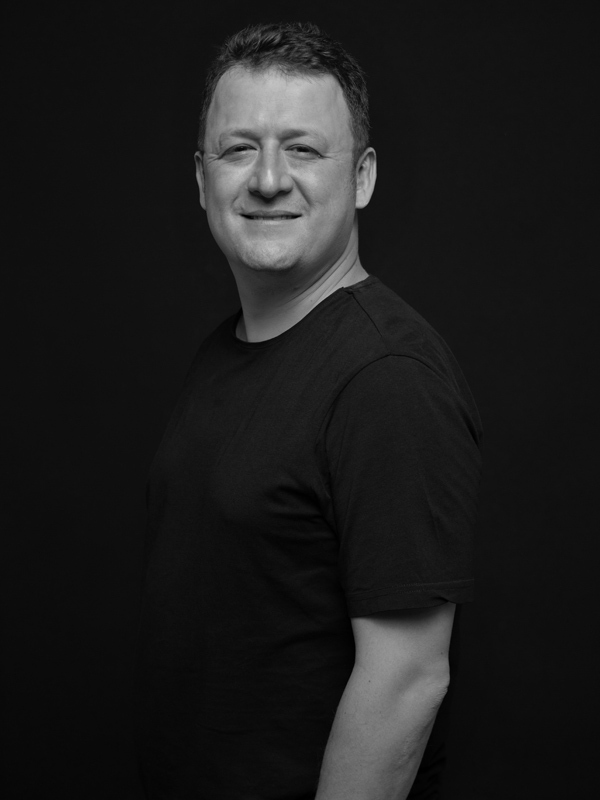
Dr. Erman Türkili
Creator of the colour- and symbol-based piano method and author of 'First Steps of the Little Pianist.'
Member of the European Academy of Sciences and Arts