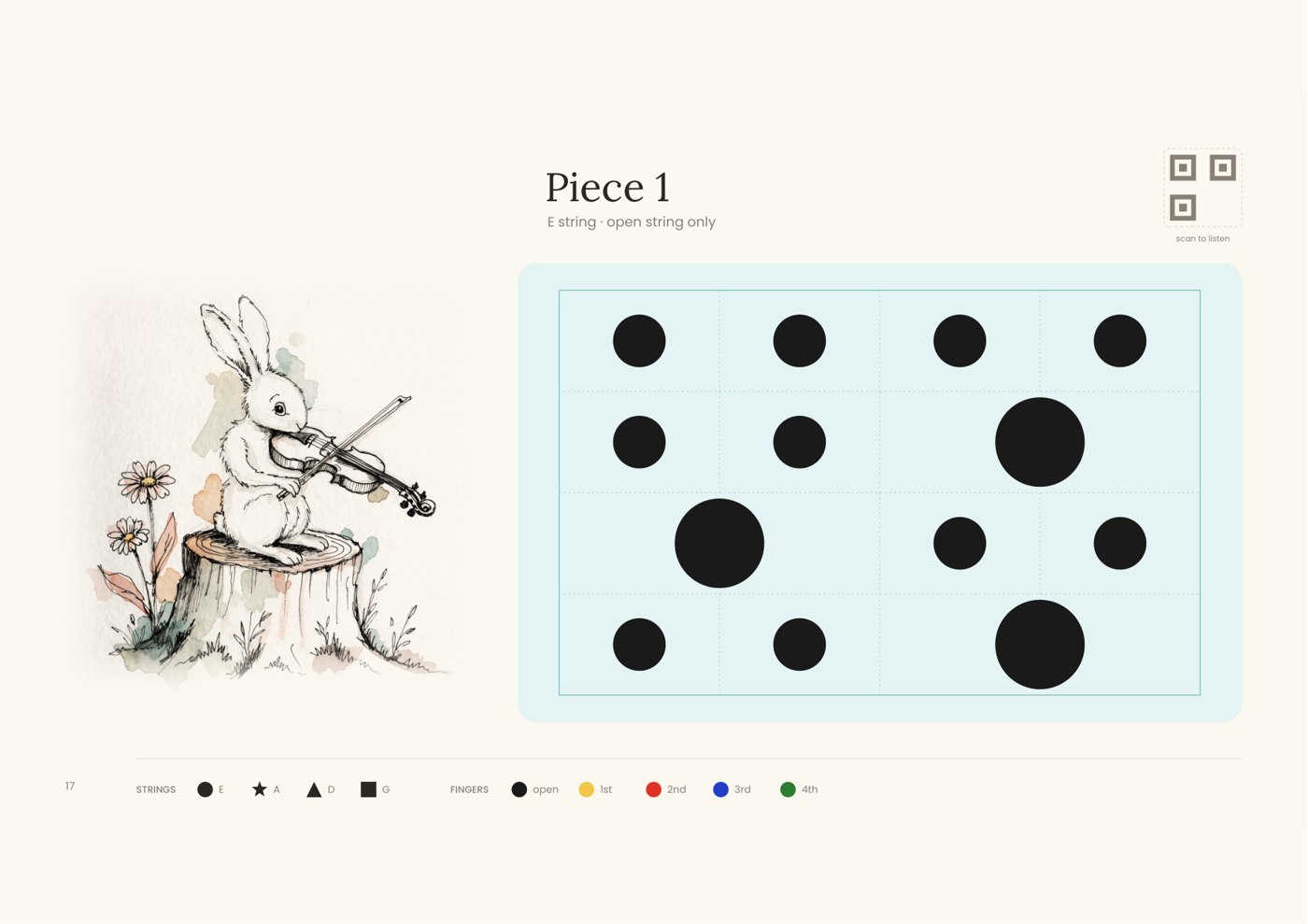
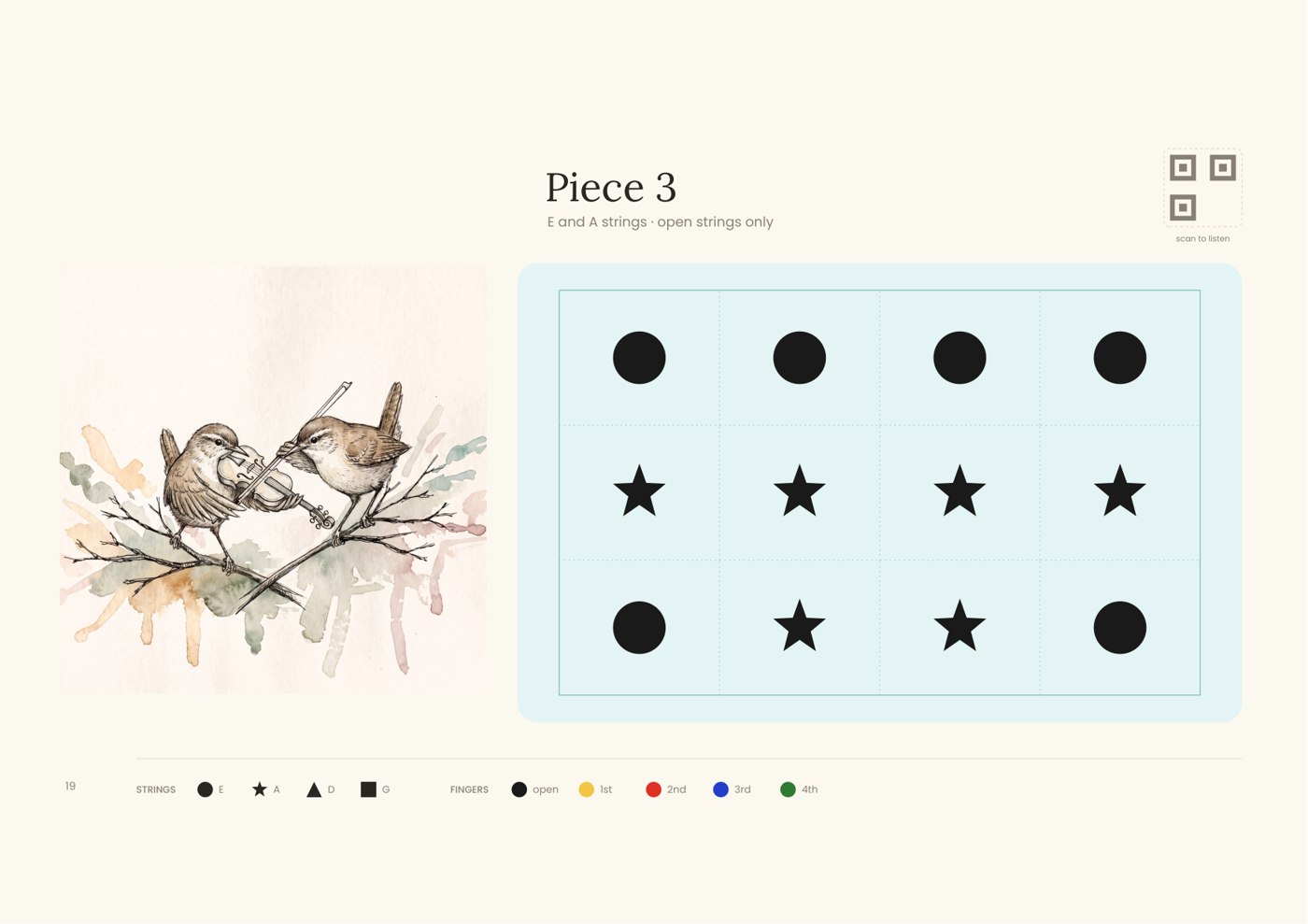
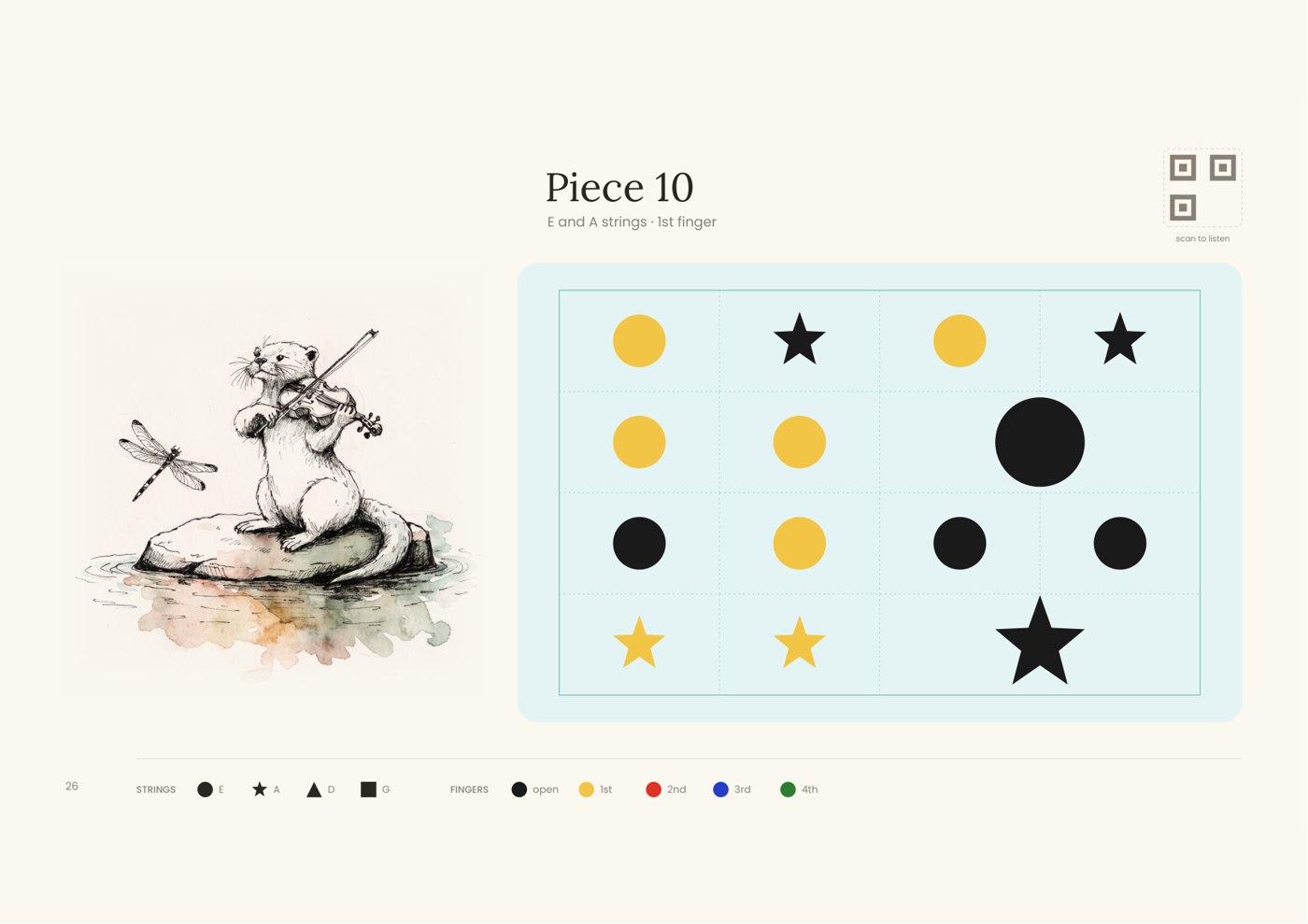
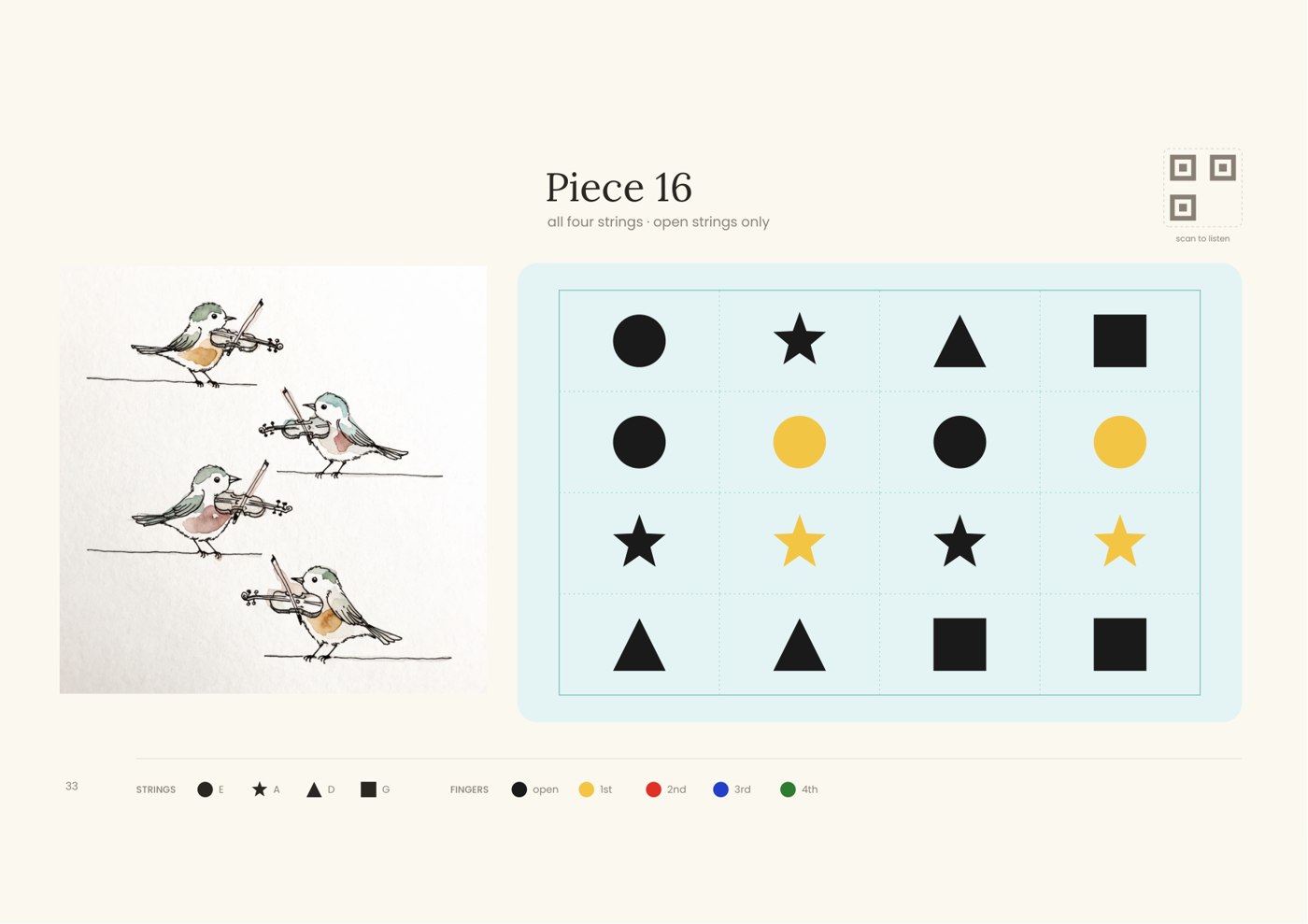
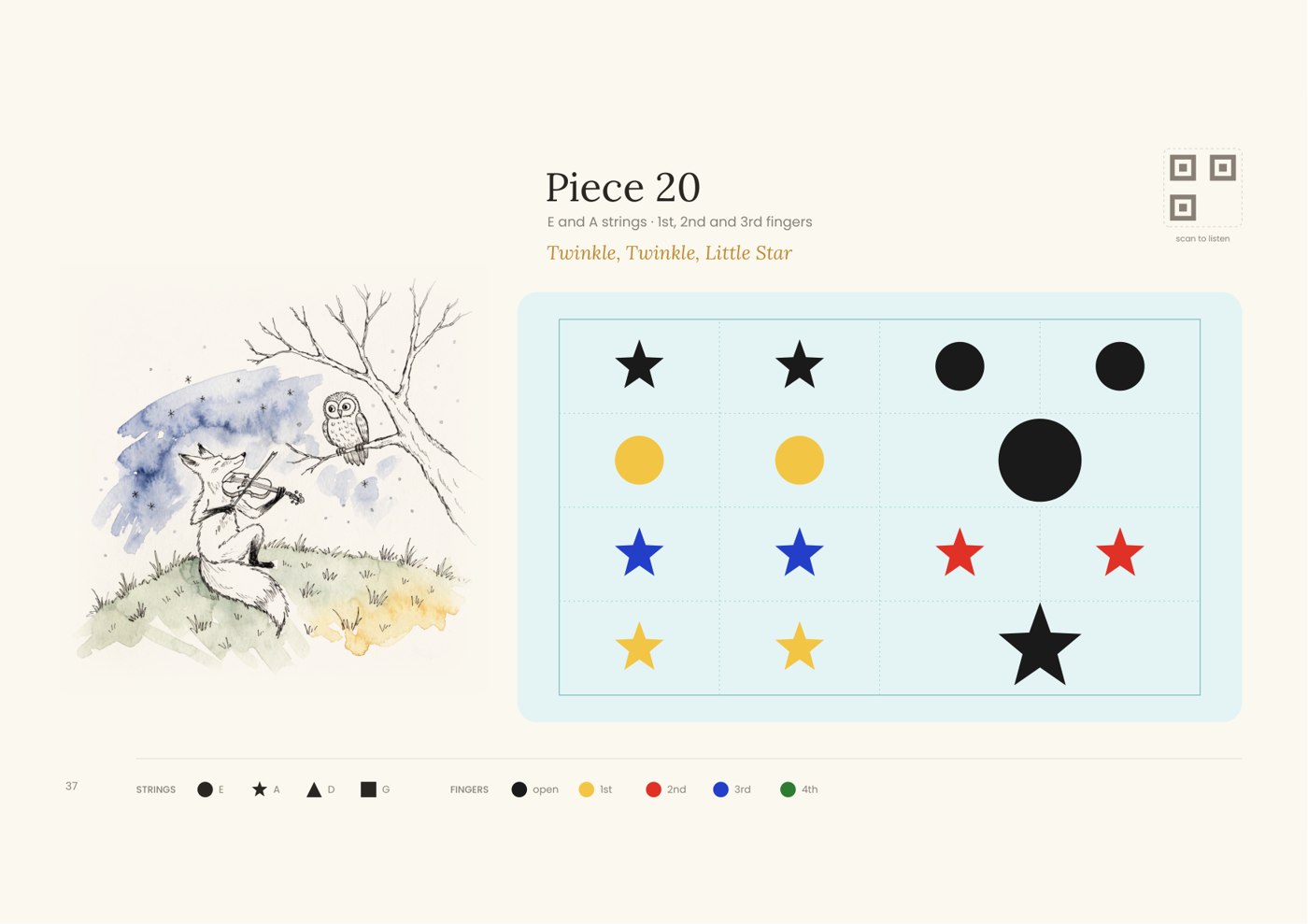
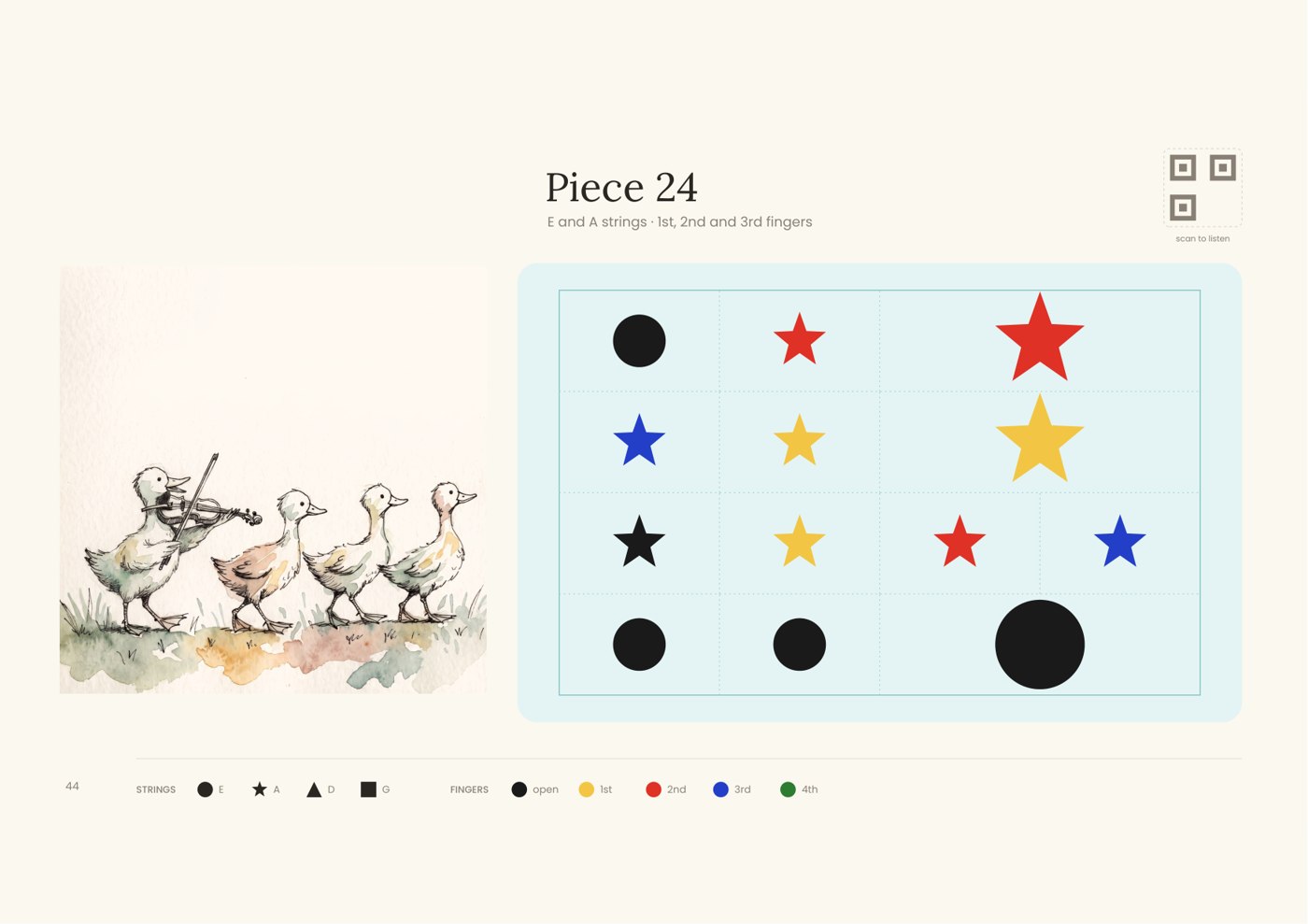
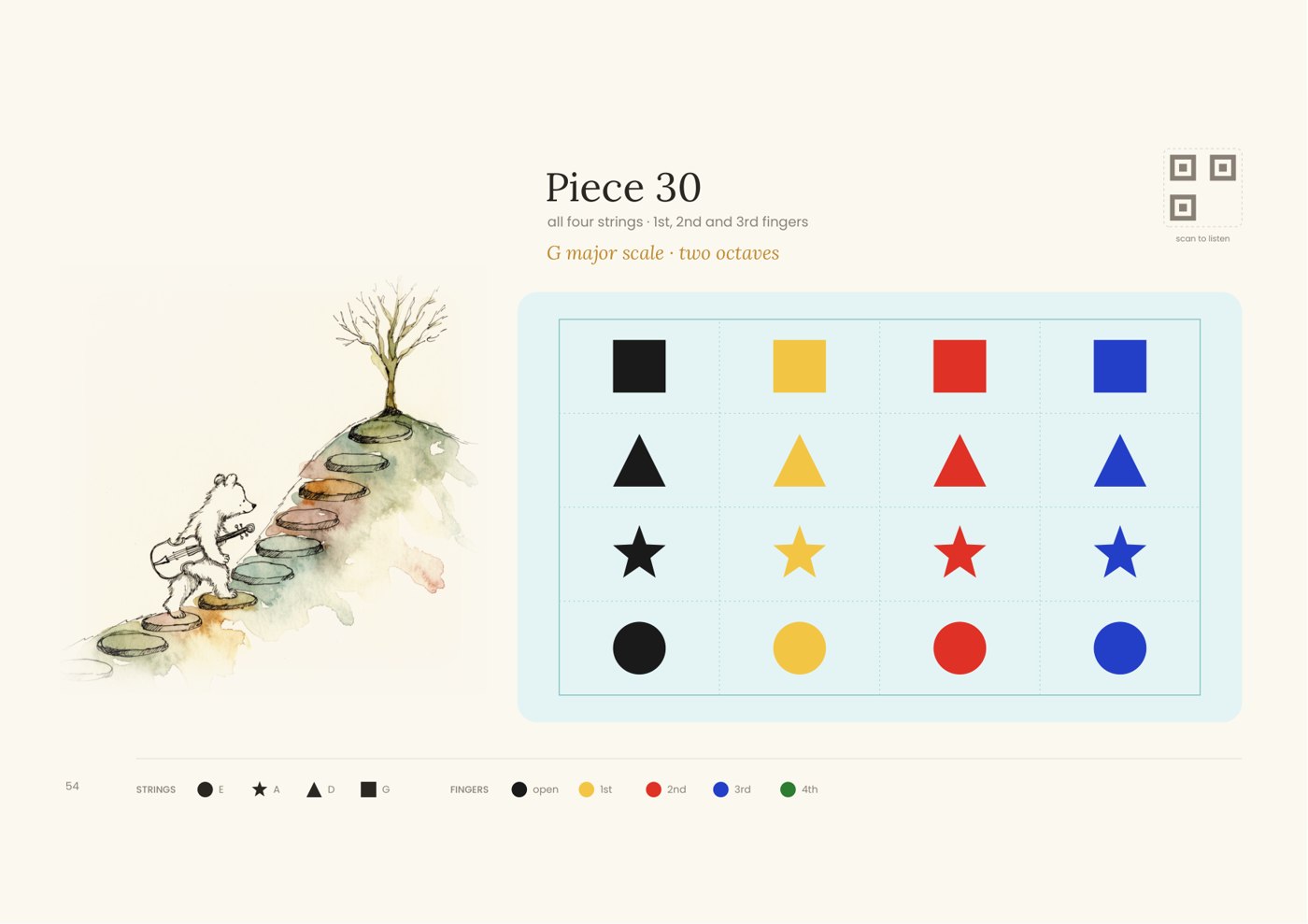
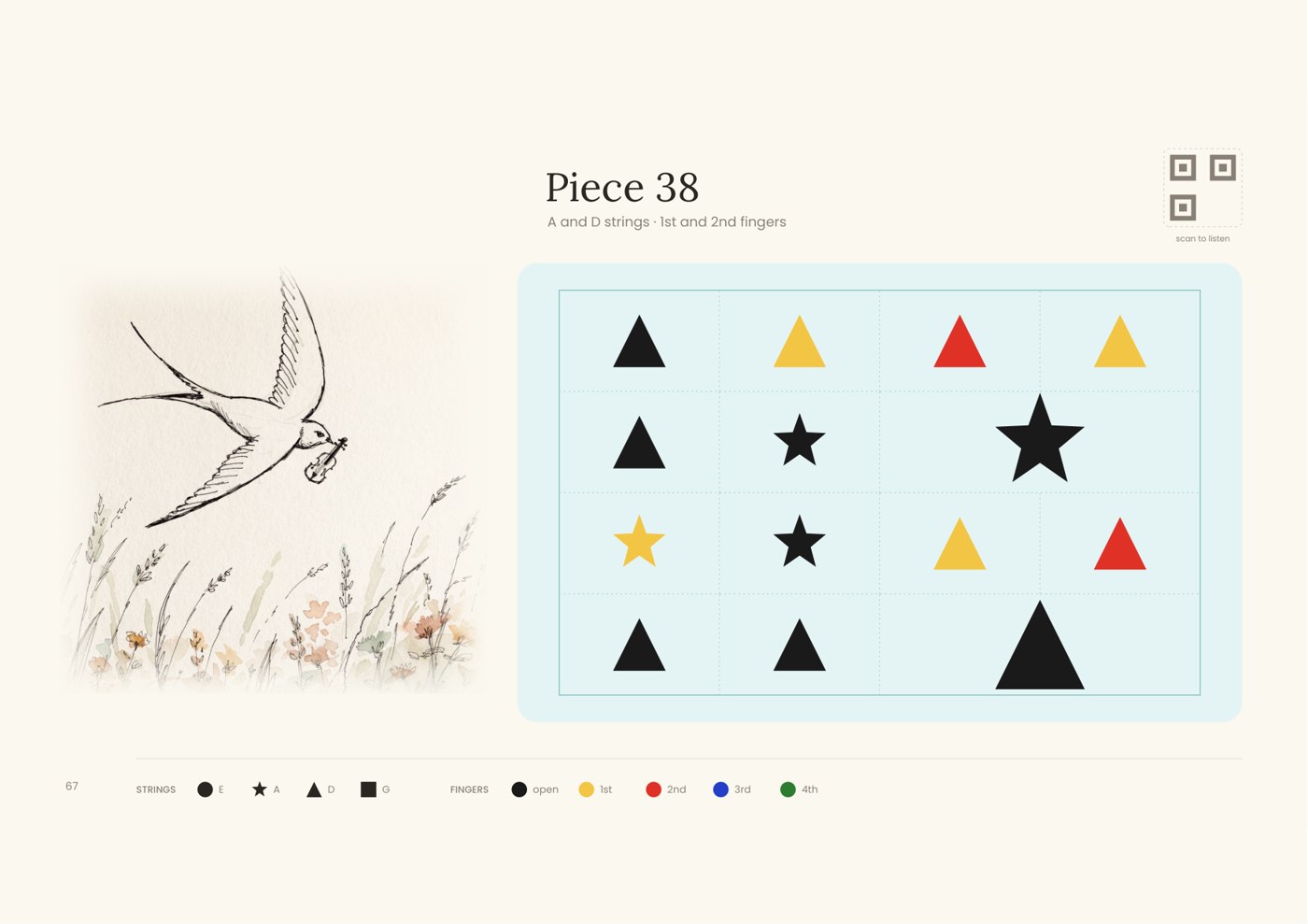
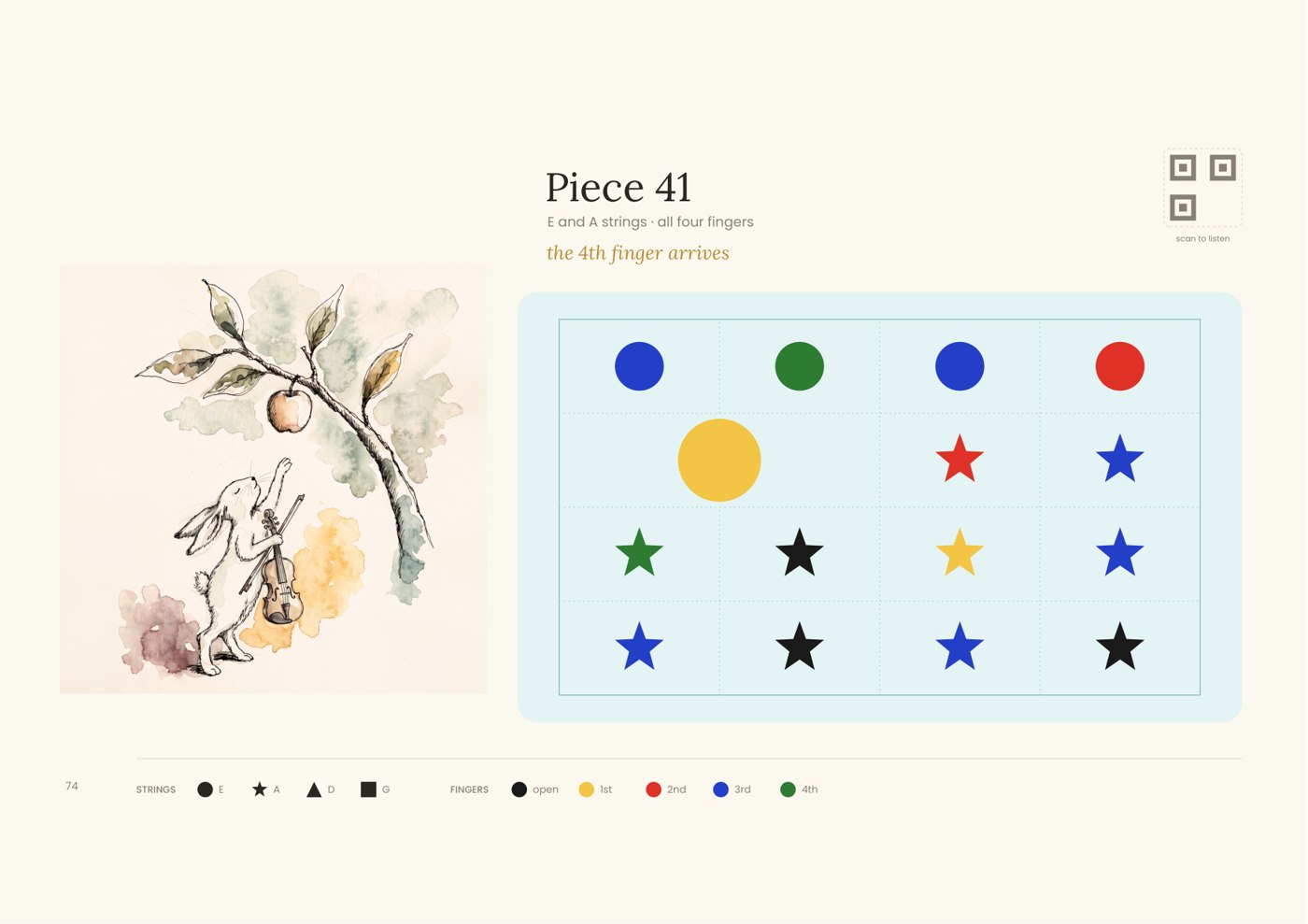
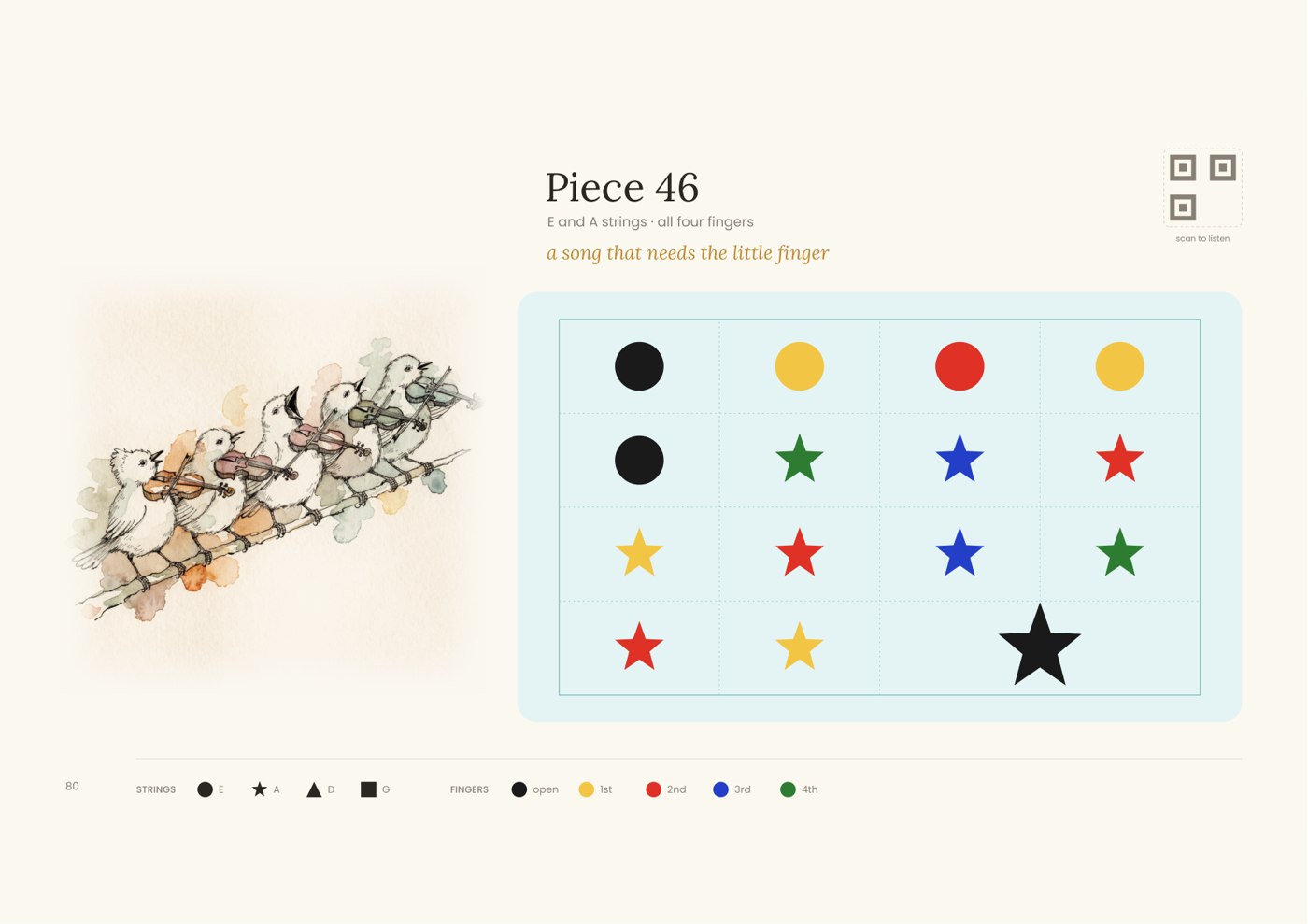
The violin adaptation of our piano method, in the same colours and shapes. Shape is the string, colour is the finger, size is how long the note lasts — no note name ever appears on the page.
The book opens with a single open string and works outward to all four strings and four fingers — one new idea per page, never more. Written for children on the autism spectrum, for anyone standard notation gets in the way of, and for first-time violinists of any age. The 1st finger arrives around piece 4, the 4th around piece 41; by piece 20, a child already knows "Twinkle, Twinkle, Little Star" by ear and reads it for the first time.
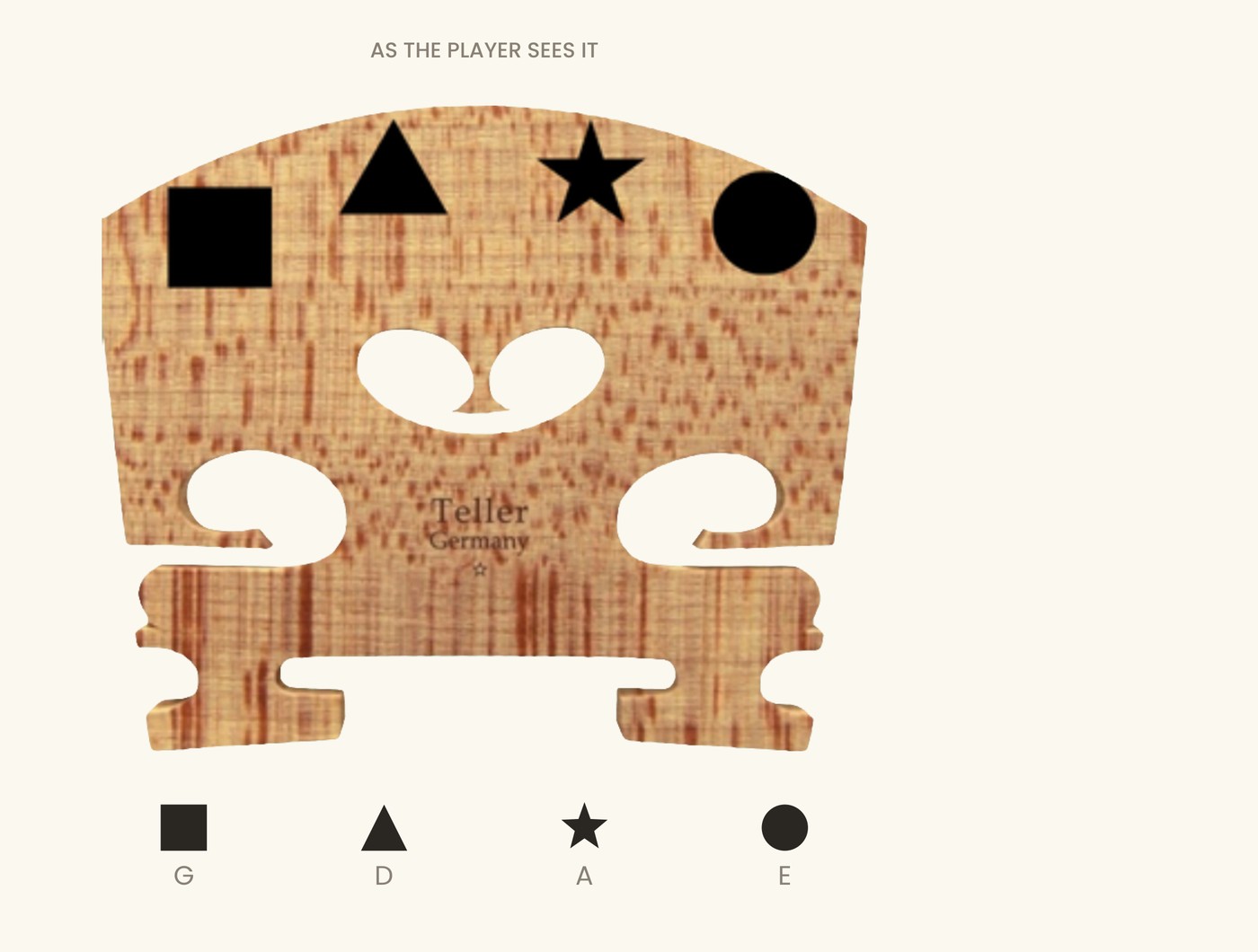
A note in the book shows how to pencil the same four symbols onto the violin’s own bridge: a square for G, a triangle for D, a star for A, a circle for E. The shape on the page and the shape on the bridge are the same — so the child recognises it at a glance.
Every piece has its own illustration. Of the book’s 46 pieces, these ten trace how the method unfolds — from the first open string to the fourth finger.
E string · open string only
E and A strings · open strings
E and A strings · 1st finger
All strings · open only
The first tune the child already knows by ear
E and A strings · 1st, 2nd and 3rd finger
Across two octaves
A and D strings · 1st and 2nd finger
E, A and D strings
E and A strings · all four fingers
All 46 pieces are written in the language shown on this page — same method, same warmth. This page will be updated once the publishing process is complete.