Contents
- Why do many autistic children connect with music?
- Music therapy and music education are not the same
- What helps in a lesson: a predictable structure
- Sensory comfort: volume, headphones and space
- Practical tips for parents and special education teachers
- Starting with colours and shapes
- Frequently asked questions
- References
Many children on the autism spectrum have a strong connection with music. Hearing the same song again and again or pressing the same piano key over and over can be both calming and enjoyable. Parents and teachers often ask how to support this interest and how to set up a lesson.
This guide summarises what research shows and offers practical ideas for home and the classroom. To be clear from the start: the music education described here is not a treatment and does not replace music therapy. The aim is for the child to enjoy making music at their own pace, feeling safe.
1. Why do many autistic children connect with music?
Music is predictable. A song repeats in the same order, the rhythm is steady and you can often guess where a melody is going. For many children who find change and uncertainty hard, that order can be reassuring. Music also offers a way to connect without words: playing together, taking turns or stopping at the same moment creates a shared experience.
Some studies have found that certain autistic children are better than their peers at telling pitches apart and remembering them (Heaton et al., 1998). This is interesting, but it does not apply to every child. Generalisations such as "all autistic children are musically gifted" are not accurate and place unnecessary expectations on families.
Autism is a spectrum, and every child is different. One child would happily play for hours, another finds certain sounds uncomfortable, a third likes only a few particular songs. The best starting point is always the child: noticing what they enjoy, what they avoid and what helps them settle.
2. Music therapy and music education are not the same
These two terms are often confused. Music therapy is a clinical practice delivered by trained, qualified music therapists who work towards specific therapeutic goals. The therapist assesses the child's needs, sets goals and uses music as a tool.
Music education teaches music itself: keeping a beat, playing a melody, listening and making music with others. A good lesson can add to a child's confidence and enjoyment, but that does not turn it into therapy.
Research makes this distinction important. The updated Cochrane review on music therapy reports that it may be associated with positive short-term outcomes in some areas, such as global improvement and quality of life, for autistic people. However, the certainty of the evidence is low to moderate, and no clear effect was shown in some areas such as social interaction (Geretsegger et al., 2022). In a large randomised trial run across several countries, improvisational music therapy did not lead to a significant difference in symptom severity compared with enhanced standard care after five months (Bieleninik et al., 2017). A smaller study found that children who took part in a music-based programme showed improvements in parent-reported communication, along with changes in connectivity between auditory and motor regions of the brain (Sharda et al., 2018). Music is a valuable area, but it calls for realistic expectations.
If your child needs therapeutic support, talk to the professionals who know your child and to a qualified music therapist. Music lessons and music apps do not replace that support; they can be an enjoyable activity alongside it.
3. What helps in a lesson: a predictable structure
Experience from teachers and parents suggests that a few principles make lessons noticeably easier. They are good practice for any young child, and for some children they make all the difference.
- Visual support: Showing the steps of the lesson with picture cards or a simple list lets the child know what is coming.
- The same order every time: A hello, a familiar song, one small new step and a goodbye song. Routine supports a sense of security.
- Short steps: Instead of a whole song, a small section of two or three keys. Move on only once a step feels comfortable.
- Success on the first try: Starting something new with a step small enough for the child to manage straight away keeps motivation high.
- A clear start and finish: Marking "we're starting" and "all done" with the same phrase, gesture or short tune each time makes transitions easier.
When something needs to change, such as moving to a new song, announce it in advance and show it visually. For many children, surprises are stressful rather than fun. Wanting to play the same song for a long time is fine: repetition is where the child feels secure, and new steps can grow from there.
4. Sensory comfort: volume, headphones and space
A large majority of autistic children experience differences in sensory processing, and difficulty filtering auditory input is one of them (Tomchek & Dunn, 2007). Sound itself can be a pleasure one moment and a burden the next, so small adjustments matter.
- Volume: Start the piano or tablet at a low volume and let the child turn it up if they want to.
- Headphones: Some children play more comfortably with headphones because background noise is reduced. Others find headphones uncomfortable. Offer the choice.
- A calm space: A tidy corner without the television or other background sounds.
- Sudden sounds: Avoid unexpected loud noises, enthusiastic clapping and surprise sound effects.
- A way to pause: Knowing how to say "stop", for example with a card or a gesture, makes the lesson feel safer.
Touch matters too. Some children press the keys very hard, others hardly want to touch them. In the first lessons the goal is not correct technique but a relaxed relationship with the instrument.
5. Practical tips for parents and special education teachers
The ideas below do not require any special musical training.
- Short, regular sessions. For most children, 5–10 minutes at the same time each day is easier than one long lesson a week.
- Start with the child's interests. A favourite song, character or colour can be the way in.
- Teach by showing. Play first and let the child copy. Sitting side by side is often easier than face to face.
- Offer choices. Two options, such as "this song or that one?", give the child a sense of control.
- Stay in touch with the team. Sharing what works with the special education teacher, occupational therapist or music therapist keeps the approach consistent across settings.
A simple notebook is enough to track progress without pressure. Jot down how long the child sat at the piano, which song they chose and whether they went to the instrument on their own. Compare the child with their earlier self, not with other children. Some weeks progress will pause, which is natural. Keep praise calm, too: a quiet "that sounded lovely" is often easier than a loud celebration.
For more detailed ideas on getting started at home, see our guide to teaching your child piano at home, and for questions about timing, read what age to start piano.
6. Starting with colours and shapes
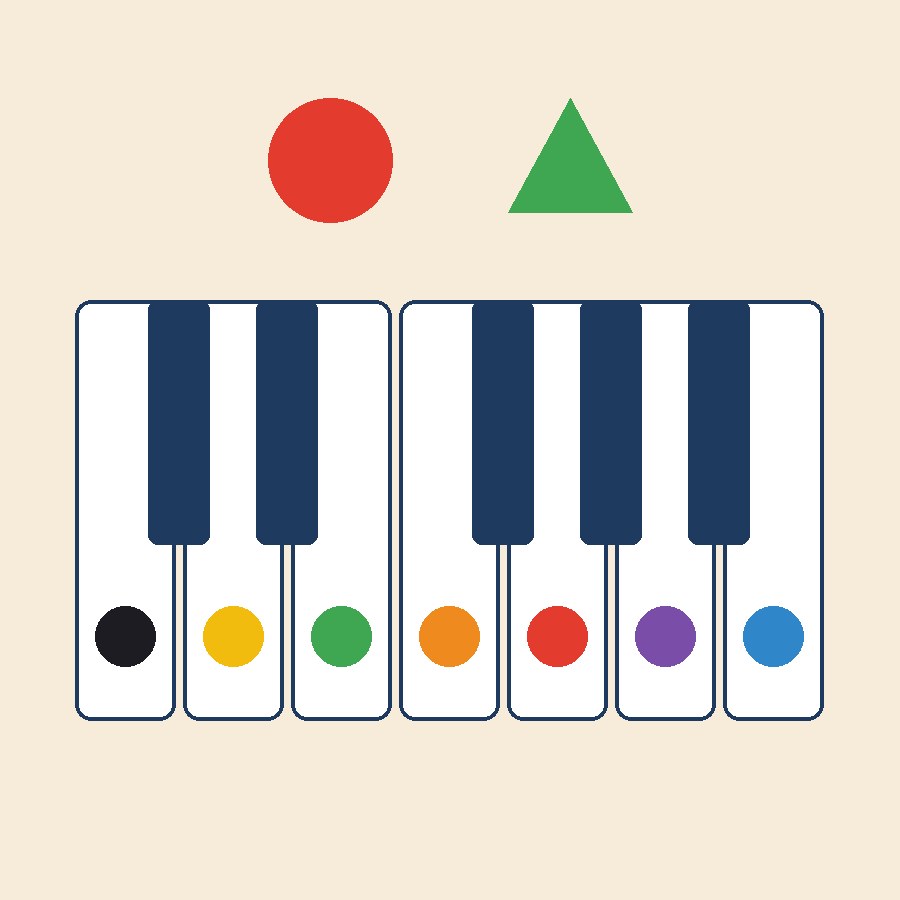
Colour and shape cues fit naturally with the principles above. In the First Steps of a Little Artist method, each of the seven white keys on the keyboard has its own colour. A circle stands for the right hand and a triangle for the left hand, which plays one octave lower. The child sees a colour and a shape and finds the same colour on the keyboard. This concrete link shows which key to play and with which hand, without long explanations.
The same songs are first played with colours and shapes, and the child then moves step by step to musical notation. Each new step builds on a familiar one. This approach is not a therapy programme designed for autistic children. Even so, its visual, predictable, small-step structure matches what many parents and teachers are looking for.
The free app that accompanies the method is designed for children aged 2.5 and up and runs on iPhone, iPad and Android. It contains no ads, so there are no unexpected images or sounds. Short levels guided by Mozart and spoken instructions in seven languages help the child know what to do each time. It also works well at a low volume or with headphones. To try it, open the demo song together and see how your child responds. For a broader look at music in the early years, our article on early childhood music education may also help.
Play a first song together
We made a demo song you can try right away in your browser. The app is free on iPhone, iPad and Android.
Open the demo songFrequently asked questions
Can music education treat autism?
No. Music education is not a treatment, and it does not replace music therapy or any other support a child receives. When it is set up well, it can be an activity the child enjoys and feels safe in.
What is the difference between music therapy and music lessons?
Music therapy is a clinical practice delivered by trained music therapists working towards specific therapeutic goals. Music lessons teach musical skills such as rhythm, melody and playing an instrument. The two can complement each other, but they are not the same thing.
My child is sensitive to loud sounds. Can they still learn piano?
Many children are comfortable playing at a low volume or with headphones. Letting the child control the volume and avoiding sudden loud sounds is a good start. If the discomfort continues, it is worth talking to the professionals who know your child.
How long should a piano session be for an autistic child?
For most young children, short and regular sessions of 5–10 minutes a day are easier than long lessons. Adjust the length to the child's attention and wishes, and end each session with a clear finish.
How can I track progress without putting on pressure?
Short notes are enough: how long the child sat at the piano, which song they chose, or whether they went to the instrument on their own. Compare the child with their earlier self, not with others.
References
- Bieleninik, L., Geretsegger, M., Mössler, K., Assmus, J., Thompson, G., Gattino, G., Elefant, C., Gottfried, T., Igliozzi, R., Muratori, F., Suvini, F., Kim, J., Crawford, M. J., Odell-Miller, H., Oldfield, A., Casey, Ó., Finnemann, J., Carpente, J., Park, A.-L., … Gold, C. (2017). Effects of improvisational music therapy vs enhanced standard care on symptom severity among children with autism spectrum disorder. JAMA, 318(6), 525–535. doi:10.1001/jama.2017.9478
- Geretsegger, M., Fusar-Poli, L., Elefant, C., Mössler, K. A., Vitale, G., & Gold, C. (2022). Music therapy for autistic people. Cochrane Database of Systematic Reviews, 2022(5), CD004381. doi:10.1002/14651858.CD004381.pub4
- Heaton, P., Hermelin, B., & Pring, L. (1998). Autism and pitch processing: A precursor for savant musical ability? Music Perception, 15(3), 291–305. doi:10.2307/40285769
- Sharda, M., Tuerk, C., Chowdhury, R., Jamey, K., Foster, N., Custo-Blanch, M., Tan, M., Nadig, A., & Hyde, K. (2018). Music improves social communication and auditory–motor connectivity in children with autism. Translational Psychiatry, 8(1), 231. doi:10.1038/s41398-018-0287-3
- Tomchek, S. D., & Dunn, W. (2007). Sensory processing in children with and without autism: A comparative study using the Short Sensory Profile. American Journal of Occupational Therapy, 61(2), 190–200. doi:10.5014/ajot.61.2.190
Related articles
What age should a child start piano?
Readiness signs, what to expect at each age and how long to practise: a calm guide to the best age to start piano.
Read the article →
How to teach your child piano at home, even without a musical background
What you need, a 10-minute daily plan, a sample first week and common mistakes, for parents with no musical background.
Read the article →
Do music lessons make children smarter?
Do music lessons raise a child's IQ? From the Mozart effect to brain imaging studies, a plain-language summary of research on early music education and children's intelligence.
Read the article →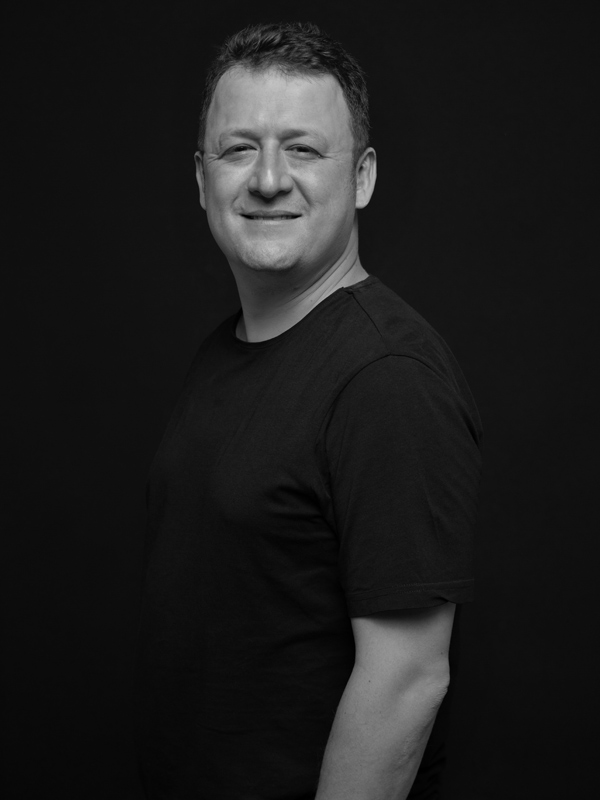
Dr. Erman Türkili
Creator of the colour- and shape-based piano method. Faculty member at Bahçeşehir University Conservatory.
Member of the European Academy of Sciences and Arts