Contents
“What age should my child start piano?” is one of the first questions parents ask once music comes up. Some hear that three is far too early. Others worry that a child who has not started by seven has already missed the boat. Both views hold a grain of truth, and neither tells the whole story.
This guide looks at what research actually says, the signs that a child is ready, and what you can realistically expect at 2.5–3, 4–5, 6–7 and beyond. We also cover practical questions, such as how long practice should last and how to choose a teacher, an app and a keyboard.
1. Is there a “magic age” for piano?
The short answer is no. Brain research does suggest that musical training in early childhood can leave lasting traces. Penhune (2011) reviews studies in which musicians who began before age seven did better on certain rhythm synchronisation tasks than musicians with the same amount of training who started later, and also showed some differences in brain structure. Steele et al. (2013) found differences in the fibres that connect the two halves of the brain in early starters as well.
These findings are interesting, but they need careful reading. They come from comparisons of adult musicians, and they do not mean that a child who starts at eight or ten cannot learn to play well. How much and how a child practises matters at least as much as the starting age. In a study that followed children through their first years on an instrument, progress was best explained by the amount of practice, the strategies children used while practising, and how long they expected to keep playing (McPherson, 2005).
One more point deserves honesty. There is no strong evidence that music lessons noticeably raise a child's general intelligence or school results. A large meta-analysis found that in well-designed studies such effects are very small or close to zero (Sala & Gobet, 2020). The best reason to start piano is the music itself.
2. Signs your child is ready
These signs tell you more than the date on a birth certificate. A child does not need to show all of them at once.
- Interest in music: sings, dances when music plays, or heads for the keyboard on their own.
- A short but real attention span: can focus on one activity for five to ten minutes.
- Knows colours and shapes: can tell basic colours apart and knows a circle from a triangle.
- Finger control: can press a single key with one finger and hold a crayon.
- Follows simple instructions: understands two-step directions such as “first this, then that”.
- Likes to copy: tries to clap back a short rhythm they have just heard.
If some of these are not there yet, there is no need to worry. Trying again in a few months is usually enough.
3. What to expect at each age
Every child develops at their own pace. The cards below offer a rough frame, not a fixed timetable.
Exploring and playing
At this age the goal is not a “lesson” but getting to know sound. Children press keys, match colours and join in with short songs. A few minutes at a time is plenty, and an adult sitting alongside makes a big difference.
First little songs
Attention spans grow and fingers become more independent. Children can play simple melodies with colours and shapes and begin to tell the right hand from the left. This is when a short, regular practice habit takes root.
Moving towards reading
As children learn to read and write, symbols become more interesting. They are ready to see songs they already know in colours and shapes written in notation too. One-to-one lessons tend to work well from this age.
Faster progress
This is not “too late”. Children of this age pick up reading and technique more quickly and find it easier to set goals and practise on their own.
In the early years, what counts is active participation. In one study, babies who attended active music classes with their parents, singing and keeping the beat together, showed more positive development in musical skills, early communication and social behaviour than babies in classes where music simply played in the background (Gerry, Unrau, & Trainor, 2012). Even for little ones, touching, singing and playing matter as much as listening.
Piano is not only for children, either. In a study of adults aged 60 and over, six months of individual piano lessons were linked to improvements on some measures of executive function and working memory (Bugos et al., 2007). If you are curious for yourself or for your child's grandparents, have a look at our article on piano for older adults. In short, it is never too late to start.
4. Traditional notation-first lessons or starting with colours and shapes?
Traditional piano lessons usually begin with the staff, clefs and note values. For a six- or seven-year-old who has started reading, this route can work well. For a three- to five-year-old, though, abstract symbols often come too soon. The child wants to play, and when they first have to decode a page, interest can fade quickly.
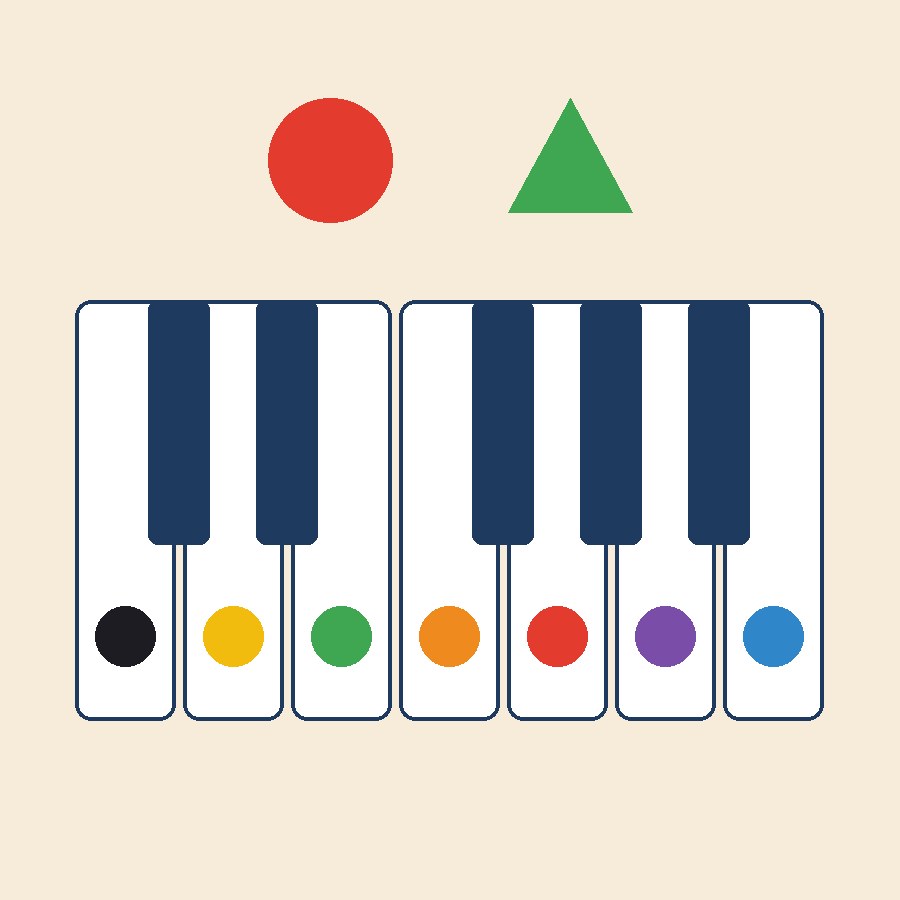
Starting with colours and shapes builds on what young children already know. Each colour stands for a white key, and a circle or a triangle shows which hand plays. That way a child can enjoy playing a real song from the very first day. The key point is this: it is not a shortcut but a starting point. The same songs are later shown in notation as well, and the child moves step by step towards reading music.
A good start protects the child's feeling of “I can play this” while preparing them for the next step: notation.
5. How long should practice last?
For young children, short and frequent practice works better than long, occasional sessions. A rough guide:
- Age 2.5–3: 3–5 minutes a day, as play.
- Age 4–5: 5–10 minutes a day, ideally at the same time each day.
- Age 6–7: 10–20 minutes a day, plus a weekly lesson.
- Age 8 and up: 20–30 minutes a day, more depending on goals.
When a child's attention drifts, ending the session is better than pushing on. Stopping while they are still enjoying it makes it easier to start again the next day. Noticing and praising small successes also helps keep motivation high.
6. Getting the start right: teacher, app and keyboard
Teacher: Look for a teacher who is used to very young children and brings play and movement into lessons. In the first lesson, watch whether your child connects with them. At this age, a teacher who listens to the child is worth more than one who seems to know everything.
App: An app does not replace a teacher, but it is a good support for short practice sessions at home. Check that it has no ads, is built from short levels and suits your child's age. For more detailed criteria, see our guide to choosing a piano app for kids.
Keyboard: You do not need an expensive piano to begin. A simple digital keyboard with full-size keys, or a tablet, is enough for the first months. We explain what to look for in our piano and keyboard guide.
The First Steps of a Little Artist method was developed for exactly this early stage, over more than twelve years of work with young children. Seven colours match the seven white keys; a circle marks the right hand and a triangle the left. The free, ad-free app is designed for children aged 2.5 and up. Children move through short levels guided by Mozart, hear spoken instructions in seven languages and can play on iPhone, iPad or Android. They start with colours and shapes and move step by step to notation with the same songs. To see how it works, try the demo song together with your child.
Play a first song together
We made a demo song you can try right away in your browser. The app is free on iPhone, iPad and Android.
Open the demo songFrequently asked questions
What is the best age to start piano lessons?
There is no single right age. Many children are ready for regular lessons somewhere between four and six, while 2.5- to 3-year-olds can get to know the keyboard through short, playful activities. Readiness signs matter more than the exact age.
Can a 3-year-old learn piano?
Yes, but at this age the goal is not a traditional lesson. It is getting to know sound and the keyboard through play. Familiar cues such as colours and shapes, and sessions of just a few minutes, work best.
How long should a young child practise piano each day?
Around 3–5 minutes a day is enough at 2.5–3, and 5–10 minutes at 4–5. Short, regular practice works better than long, occasional sessions. Ending while your child is still enjoying it is a good habit.
Is it too late to start piano after age seven?
No. Starting early may bring some advantages, but progress depends largely on regular, good-quality practice. Older children, teenagers and adults can all learn to play.
Do we need a real piano to get started?
No. A simple digital keyboard with full-size keys, or a tablet, is enough for the first months. If your child stays interested, you can move to a better instrument later.
References
- Bugos, J. A., Perlstein, W. M., McCrae, C. S., Brophy, T. S., & Bedenbaugh, P. H. (2007). Individualized piano instruction enhances executive functioning and working memory in older adults. Aging & Mental Health, 11(4), 464–471. doi:10.1080/13607860601086504
- Gerry, D., Unrau, A., & Trainor, L. J. (2012). Active music classes in infancy enhance musical, communicative and social development. Developmental Science, 15(3), 398–407. doi:10.1111/j.1467-7687.2012.01142.x
- McPherson, G. E. (2005). From child to musician: Skill development during the beginning stages of learning an instrument. Psychology of Music, 33(1), 5–35. doi:10.1177/0305735605048012
- Penhune, V. B. (2011). Sensitive periods in human development: Evidence from musical training. Cortex, 47(9), 1126–1137. doi:10.1016/j.cortex.2011.05.010
- Sala, G., & Gobet, F. (2020). Cognitive and academic benefits of music training with children: A multilevel meta-analysis. Memory & Cognition, 48(8), 1429–1441. doi:10.3758/s13421-020-01060-2
- Steele, C. J., Bailey, J. A., Zatorre, R. J., & Penhune, V. B. (2013). Early musical training and white-matter plasticity in the corpus callosum: Evidence for a sensitive period. The Journal of Neuroscience, 33(3), 1282–1290. doi:10.1523/JNEUROSCI.3578-12.2013
Related articles
How to teach your child piano at home, even without a musical background
What you need, a 10-minute daily plan, a sample first week and common mistakes, for parents with no musical background.
Read the article →
Autism and music education: a guide for parents and teachers
Music with autistic children: therapy vs. lessons, predictable lesson structure, sensory comfort and progress without pressure.
Read the article →
Do music lessons make children smarter?
Do music lessons raise a child's IQ? From the Mozart effect to brain imaging studies, a plain-language summary of research on early music education and children's intelligence.
Read the article →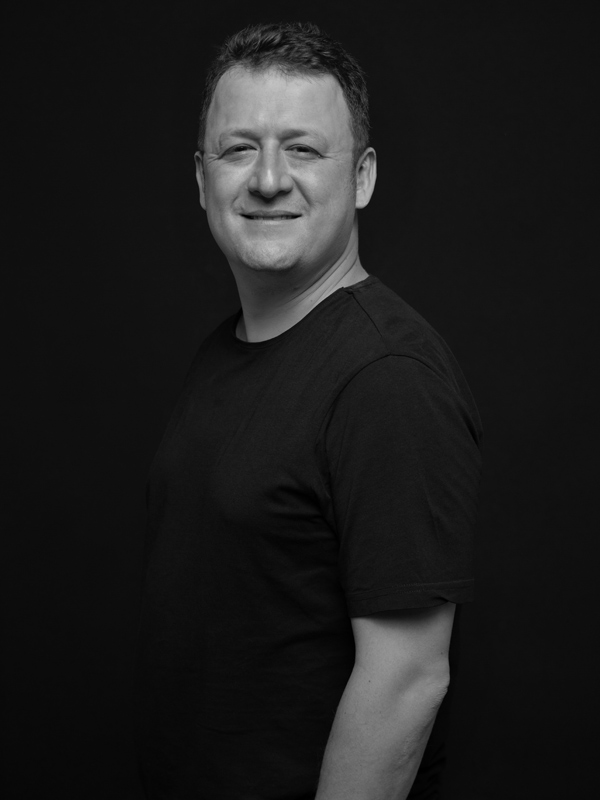
Dr. Erman Türkili
Creator of the colour- and shape-based piano method. Faculty member at Bahçeşehir University Conservatory.
Member of the European Academy of Sciences and Arts