Contents
You do not need to be a pianist to help your child take their first steps at the keyboard. What a young child needs most at the start is a calm, regular moment of music with someone they love. This guide covers the practical side: equipment, a daily plan, a first week and the mistakes worth avoiding.
We have been developing our colour- and shape-based method with young children for more than 12 years, first in the United States and then in Istanbul. Many of the families we work with started at home with no musical training at all. The suggestions below draw on that experience and on research into the role parents play in children's music learning.
1. What you need: a keyboard and a corner of your own
For a young beginner, a simple digital keyboard or digital piano is enough. Look for full-size keys, at least 61 keys and, if possible, touch-sensitive keys, so the sound gets louder when your child presses harder. Toy keyboards with tiny keys make it harder to find a good hand position later. You will find a detailed comparison of sizes, key types and budgets in our guide to choosing a first piano or keyboard.
The place matters as much as the instrument. A few simple choices make daily practice much easier:
- Keep it ready. A keyboard that is set up and switched on in seconds gets played far more often than one stored in a box.
- Get the height right. When your child sits, their forearms should be roughly level with the keys. A cushion on the chair and a box or step under the feet usually solve this.
- Choose a quiet spot. Turn off the TV and put phones away during practice time. Good light helps your child see the colours and shapes clearly.
- Add a chair for yourself. Place a second chair next to your child. Your presence is part of the lesson.
2. A 10-minute daily plan
With children aged three to six, short and regular sessions work better than long and occasional ones. Ten minutes a day at roughly the same time, for example after breakfast or before bath time, quickly becomes part of the family routine. Here is a simple structure you can repeat every day:
- Hello (1 minute): Sit down together, find the circle hand and the triangle hand, wiggle the fingers and press a few keys gently.
- Listen and sing (2 minutes): Listen to today's song or sing it together. Clap its rhythm on your knees.
- Play (4 minutes): Work on one short part of the song by following the colours. Repeat it two or three times, not more.
- Free play (2 minutes): Let your child invent something: "rain music" on the high keys, "bear steps" on the low keys, a loud part and a quiet part.
- Mini concert (1 minute): Your child plays what they learned for you, a sibling or, on video, for the grandparents. Clap, and stop while it is still fun.
3. A sample first week
The first week is about getting to know the instrument, not about results. Here is a plan you can adapt to your child's pace:
Meet the keyboard
Explore high and low, loud and soft. Find the seven colours on the white keys. Learn that the circle means the right hand.
A first right-hand song
Play the first short part of a familiar song with the right hand, following the colours. Try the first level of the app together.
The triangle hand
The triangle shows the left hand, which plays an octave lower. Try a short left-hand part, then go back to the right hand.
First concert
Your child plays everything they know for the family. Film it, and let your child choose next week's song.
4. How to keep your child motivated
Research with young musicians suggests that parents' involvement matters most at the start. In one study, the most successful young learners had parents who were closely involved in the early years, attending lessons and supporting practice, and who stepped back as the child's own motivation grew (Davidson et al., 1996). Parents support motivation by helping children feel capable, giving them some choice and keeping music a warm, shared experience (McPherson, 2009). Stronger parental support is also linked with pupils' enjoyment, motivation and progress (Creech, 2010).
In everyday practice at home, this means:
- Praise the effort, not the talent. "You kept trying until you found the right key" helps more than "You're so talented." Children praised for being smart gave up more easily after a difficult task than children praised for their effort (Mueller & Dweck, 1998).
- Keep sessions short. Stop before your child gets bored. Ending on a good moment makes them want to come back tomorrow.
- Use their own songs. A song from nursery, a favourite cartoon tune or a melody they made up themselves keeps interest alive.
- Make music together. Sing while your child plays, or add a simple rhythm on a drum. Four-year-olds who made music together were afterwards more helpful and cooperative than children who played a similar game without music (Kirschner & Tomasello, 2010).
In a large Australian study, children who often shared music activities with their parents at age two to three had slightly better vocabulary, number skills and attention at age four to five (Williams et al., 2015). The associations are modest, but a few minutes of music together is time well spent.
5. Common mistakes and when to look for a teacher
Most problems at home come from good intentions. These are the ones we see most often:
- Sessions that are too long. Half an hour once a week tires a young child, while ten minutes a day builds a habit.
- Correcting every mistake. Choose one thing to improve in each session and let the rest go.
- Taking over the keyboard. Show it once, then hand the keys back. Children learn by doing.
- Turning music into a bargain or a punishment. "No tablet until you practise" links the piano with pressure.
- Thinking "I don't know music, so I can't help." Your role is not to be the expert but to be a curious partner. Learning together is a strength.
Practising at home and taking lessons are not opposites. It may be time to look for a teacher when your child plays the first songs confidently with both hands, asks questions you cannot answer, or shows tension in the hands or posture that does not go away. If you are unsure about timing, our article on what age a child can start piano explains what to expect at each age.
6. Colours, shapes, the app and the demo song at home
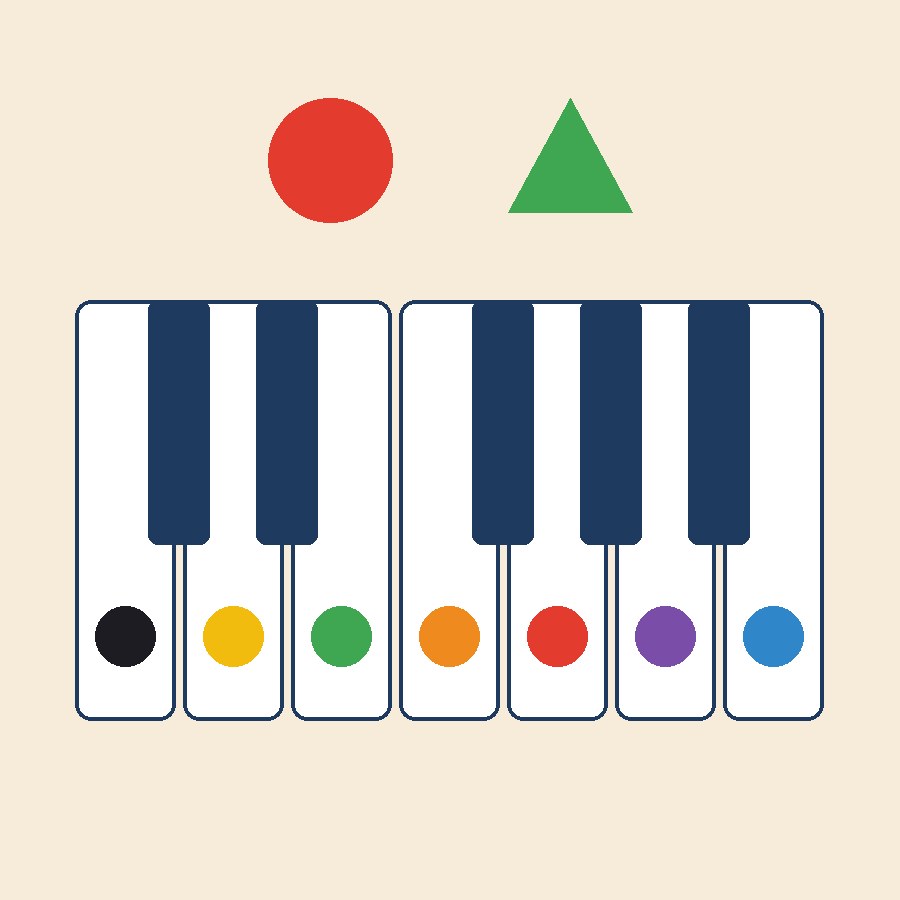
In our method every white key has its own colour: seven colours for the seven white keys. A circle shows the right hand and a triangle shows the left hand, which plays an octave lower. This lets a parent with no musical training guide a child from the very first day: you both see the colour, find the key and use the correct hand.
Starting with colours and shapes does not replace notation. Once your child feels confident, they move to notation step by step, using the same songs they already know. The method's free app supports this at home. It has no ads, is designed for children from 2.5 years, offers short levels guided by Mozart with spoken instructions in seven languages, and runs on iPhone, iPad and Android. Families in 58 countries use it today. If you are comparing options, our article on choosing a piano app for kids lists what to look for.
The easiest way to begin is to sit down together this evening and try our demo song in your browser. Ten minutes, a keyboard and your attention are enough for a good first step.
Play a first song together
We made a demo song you can try right away in your browser. The app is free on iPhone, iPad and Android.
Open the demo songFrequently asked questions
Can I teach my child piano if I can't play myself?
Yes. At the start your role is to create a calm, regular moment of music and to learn together with your child. Colour- and shape-based materials let you guide the first songs without any musical training.
How long should a young child practise piano each day?
For children aged three to six, about ten minutes a day is enough. Short, regular sessions build a habit better than long, occasional ones.
What kind of keyboard do I need to teach my child at home?
A digital keyboard or digital piano with full-size keys and at least 61 keys is a good start. Touch-sensitive keys are a plus, while toy keyboards with small keys are best avoided.
When should my child start lessons with a teacher?
When your child plays the first songs confidently with both hands, asks questions you cannot answer or needs help with hand position, a teacher is a good next step. Practising at home stays useful alongside lessons.
How do I keep my child motivated to practise?
Keep sessions short, praise effort rather than talent and let your child choose some of the songs. Playing or singing together and small family concerts also help.
References
- Creech, A. (2010). Learning a musical instrument: The case for parental support. Music Education Research, 12(1), 13–32. doi:10.1080/14613800903569237
- Davidson, J. W., Howe, M. J. A., Moore, D. G., & Sloboda, J. A. (1996). The role of parental influences in the development of musical performance. British Journal of Developmental Psychology, 14(4), 399–412. doi:10.1111/j.2044-835X.1996.tb00714.x
- Kirschner, S., & Tomasello, M. (2010). Joint music making promotes prosocial behavior in 4-year-old children. Evolution and Human Behavior, 31(5), 354–364. doi:10.1016/j.evolhumbehav.2010.04.004
- McPherson, G. E. (2009). The role of parents in children's musical development. Psychology of Music, 37(1), 91–110. doi:10.1177/0305735607086049
- Mueller, C. M., & Dweck, C. S. (1998). Praise for intelligence can undermine children's motivation and performance. Journal of Personality and Social Psychology, 75(1), 33–52. doi:10.1037/0022-3514.75.1.33
- Williams, K. E., Barrett, M. S., Welch, G. F., Abad, V., & Broughton, M. (2015). Associations between early shared music activities in the home and later child outcomes: Findings from the Longitudinal Study of Australian Children. Early Childhood Research Quarterly, 31, 113–124. doi:10.1016/j.ecresq.2015.01.004
Related articles
What age should a child start piano?
Readiness signs, what to expect at each age and how long to practise: a calm guide to the best age to start piano.
Read the article →
Autism and music education: a guide for parents and teachers
Music with autistic children: therapy vs. lessons, predictable lesson structure, sensory comfort and progress without pressure.
Read the article →
Do music lessons make children smarter?
Do music lessons raise a child's IQ? From the Mozart effect to brain imaging studies, a plain-language summary of research on early music education and children's intelligence.
Read the article →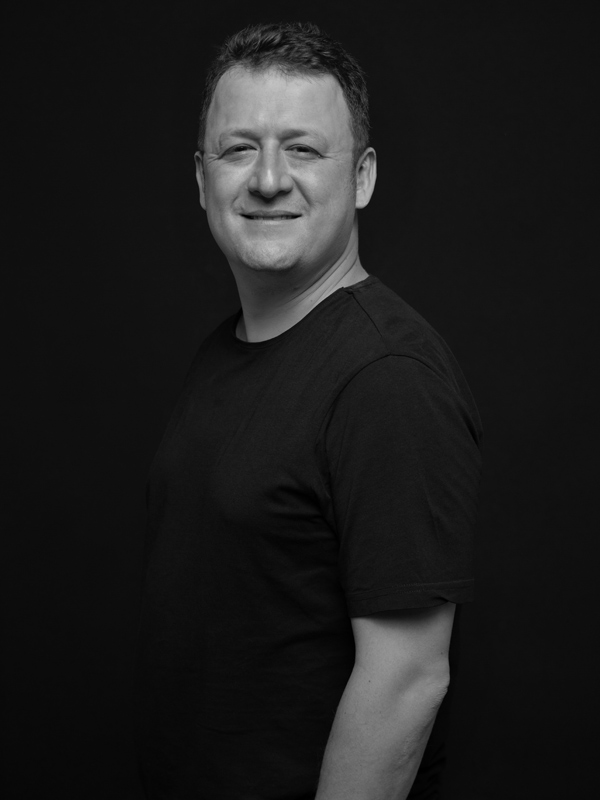
Dr. Erman Türkili
Creator of the colour- and shape-based piano method. Faculty member at Bahçeşehir University Conservatory.
Member of the European Academy of Sciences and Arts